
How Much Does Bumper Repair Cost in South San Francisco?
September 28, 2026 · 8 min read
A scuff and a cracked cover are two different jobs at two different prices. What actually sets the number, typical local ranges, and when a claim costs more than the repair.
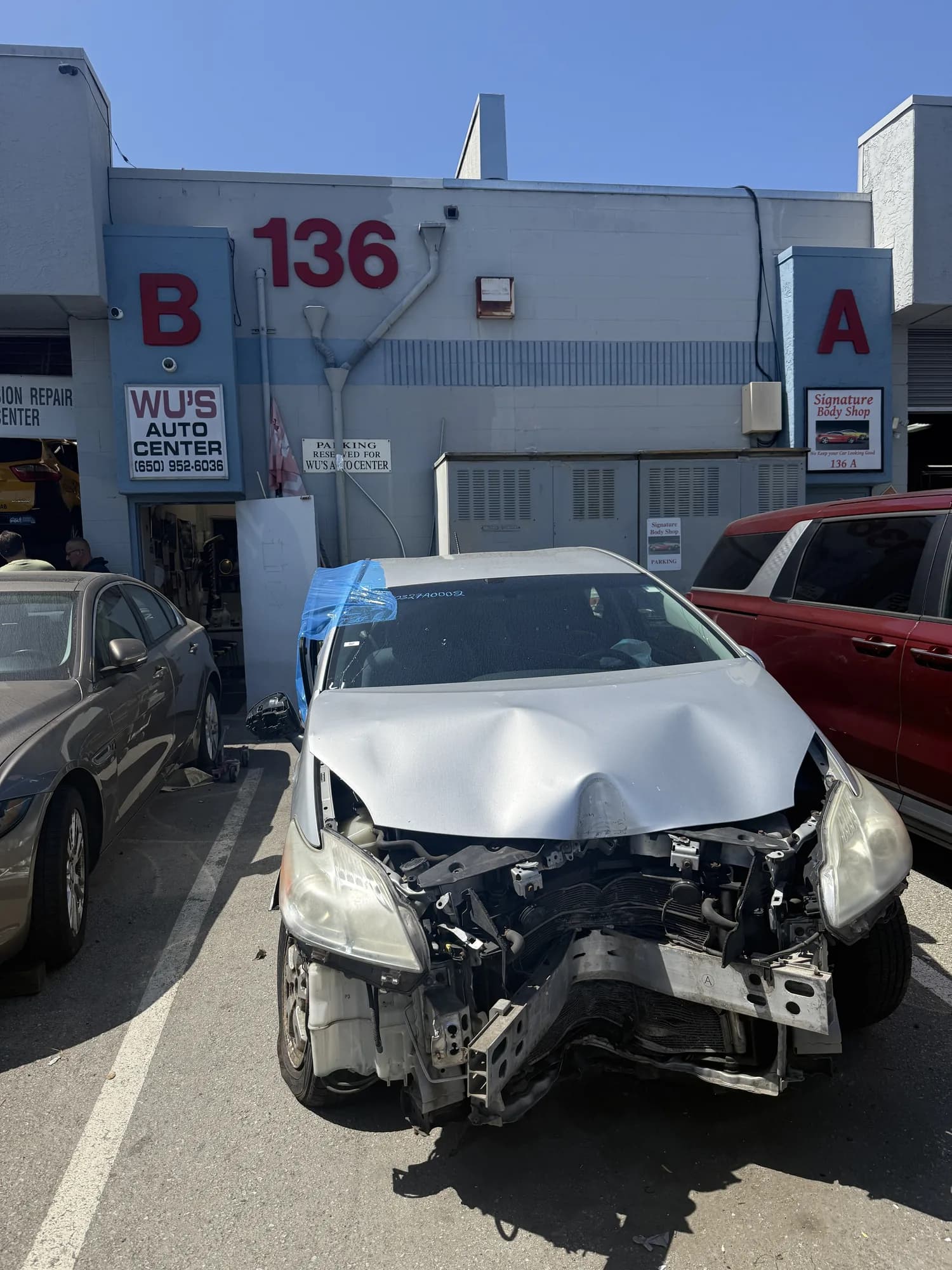
Bumper repair in South San Francisco generally runs from about $150 for a scuff that polishes out to $1,800 or more for a replacement cover on a car with sensors behind it. The number is set by three things: whether the paint is broken, whether the cover can be repaired or has to be replaced, and what electronics sit behind the plastic.
That last one is why bumper repair costs more than it used to. A bumper is no longer a piece of painted plastic. On a lot of cars it is the mounting point for parking sensors, a forward radar unit and a camera, and every one of those has to come out, go back and in some cases be recalibrated.
What actually drives bumper repair cost
Five variables set the price, and you can assess four of them yourself standing next to the car.
- Is the paint broken? The single biggest fork in the road. Intact paint means the damage may polish or push out. Broken paint means the panel has to be prepped, refinished and blended, which is most of the labor on any painted repair.
- Repair or replace? A clean crack in a plastic cover can often be welded and reinforced from behind. A cover that is torn, shattered at a mounting tab or missing material gets replaced.
- What is behind it. Parking sensors, forward radar, cameras, fog lamps, washer nozzles and the crash absorber all live behind the cover.
- The color. Solid colors are straightforward. Metallics, pearls and three-stage finishes take more work to lay down and blend.
- Hidden damage. The absorber, the crash bar and the brackets only become visible once the cover is off.
The electronics variable is the one that has changed fastest. AAA testing found that advanced driver assistance systems can add up to 37.6% to the total cost of repairing a vehicle after a crash, and that sensor repair plus calibration alone can add up to $3,000. [Source: AAA, ADAS Sensor Calibration Increases Repair Costs] For a front impact specifically, AAA put the cost attributable to damaged radar sensors and cameras at up to $1,540 on its own.
Typical bumper repair cost ranges
These brackets reflect what this kind of work runs on the Peninsula. They orient you before you get a quote. They are not a quote, because the only honest number comes after someone looks at the car.
| Damage | Typical range | What the shop is doing |
|---|---|---|
| Scuffs, light scratches, paint intact | $150 to $400 | Wet sand, machine polish, possible spot repair |
| Scrapes through the paint | $400 to $900 | Fill, prime, refinish, blend into adjacent panels |
| Cracked cover, repaired | $600 to $1,200 | Plastic weld, reinforce from behind, refinish whole cover |
| New cover, painted and fitted | $900 to $1,800 | Part, paint, install, reassemble trim and lighting |
| Sensors, cameras or radar involved | Add $300 to $1,540 | Parts plus calibration where the manufacturer requires it |
Calibration is no longer an edge case. CCC Intelligent Solutions found that 28.3% of repairable estimates now include at least one calibration operation. [Source: CCC Intelligent Solutions, Crash Course 2026, reported by Autobody News] Close to one repair in three. If your car is a 2018 or newer with adaptive cruise or parking sensors, assume it applies to you until a shop tells you otherwise.
Should you claim it or pay for it yourself?
Pay out of pocket when the repair costs less than your deductible, which on small bumper work it often does. If your deductible is $1,000 and the job is $700, filing costs you more than the repair and puts a claim on your record for nothing.
There is a second cost to filing that the estimate never shows. Full coverage rates rise an average of 49% a year after an at-fault accident, which works out to about $1,160 more annually than a driver with a clean record pays, and the increase lasts at least three years. [Source: NerdWallet, How Much Insurance Goes Up After an Accident] On a borderline repair, three years of that can exceed the repair itself.
The calculation flips in two situations. First, when the number clears the deductible by enough to matter. Second, when the impact went past the cover into structure, because that is no longer cosmetic work and the bill can climb fast once panels come off. Our insurance claims process covers what happens after you decide to file, including the part most people get wrong: in California you choose the repair shop, not your insurer. If the impact turns out to have gone past the cover, that becomes auto body repair rather than a bumper job, and the arithmetic changes with it.
Get the written estimate before you decide. The estimate costs nothing and it is the only way to know which side of the line you are on.
Why the cheapest bumper quote is often the most expensive
A bumper can be made to look acceptable for very little money. The shortcuts are predictable and they are all invisible on the day you collect the car.
- Skipping prep. Paint sprayed over inadequate preparation looks correct for months and then lifts.
- No blend. Spraying only the cover and stopping at the panel edge leaves a line your eye finds in daylight.
- Reusing broken clips. The cover sags at a corner within weeks.
- Skipping calibration. The cheapest way to handle a radar unit is to bolt it back and say nothing.
That last one is the one worth caring about. A forward radar that sits a fraction out of alignment still reports that it is working. You find out it is not when the automatic braking does not brake.
The no-blend shortcut is the one you see. Vehicle manufacturers allow their paint suppliers roughly 5% variance from the original color standard, and a single factory paint code commonly carries between three and seven alternate formulas in professional refinish databases. [Source: PPG Refinish, Identify Color Formula] Spraying the code straight from the can and stopping at the panel edge is how a bumper ends up half a shade off the fenders either side of it.
The tell is the estimate itself. A real one lists prep, refinish, blend and calibration as separate operations and says what happens to the clips and brackets. A quote that is one line and a total does not tell you what you are buying. The same logic applies across every job we quote, from dent and bumper repair to full collision repair.
What repairs and what gets replaced
Plastic bumper covers are more repairable than most people assume. A crack with clean edges and intact mounting points is a candidate for plastic welding, which costs meaningfully less than a new painted cover.
Replacement becomes the answer when the mounting tabs are destroyed, when the cover is torn rather than cracked, or when material is missing. It also becomes the answer when the part is cheap enough that repair labor exceeds it, which happens on some high volume models.
The broader point is that repair versus replace is a judgment about that specific part on that specific car. If a shop tells you every damaged bumper needs replacing, they are describing their workflow, not your car.
How we quote bumper repair in South San Francisco
We look at the car with you, tell you whether it repairs or replaces, identify what is behind the cover, and put the whole thing in writing at no charge. If the answer is $200 of polishing rather than $1,200 of bodywork, the estimate says that.
We are at 136 South Linden Ave in the Lindenville district, two minutes off the 101 and the I-380 interchange, and we have been repairing Peninsula vehicles since 1987. Body and mechanical work both happen in house, so a car that took a hit to the bumper and also needs mechanical work is one visit rather than two shops. You can also send photos instead of driving over: a straight-on shot, one from each corner and a close-up of the worst area is usually enough for a range.
Common questions about bumper repair cost
Can a cracked bumper be repaired instead of replaced?
Often, yes. Plastic bumper covers can be welded and reinforced from behind when the crack has clean edges and the mounting tabs are intact, then refinished so the repair is invisible. Replacement becomes necessary when the cover is torn rather than cracked, when material is missing, or when the mounting points that hold it to the car are destroyed. Repair is usually the cheaper route, though not always: on some high volume models the replacement part is inexpensive enough that repair labor costs more than a new cover.
Why does a small bumper scuff cost several hundred dollars?
Because refinishing is labor, not material. Once the paint is broken, the area has to be sanded, filled where needed, primed, sealed, sprayed with color, cleared and then blended into the panels either side so there is no visible edge. That sequence takes the same skill and the same booth time whether the damaged area is the size of a hand or the size of a door. The paint also has to cure before the car can leave, which is why even small refinish work takes days rather than hours.
Will my car need recalibration after bumper work?
If it has parking sensors, forward radar, a front camera or adaptive cruise control, very possibly. CCC data puts calibrations on 28.3% of repairable estimates, and the requirement is set by the manufacturer's own repair procedure rather than by the shop's preference. Ask the question directly when you get your estimate, and ask for the calibration to appear as its own line. A shop that cannot tell you whether your car needs one has not looked up the procedure.
Does a bumper repair have to be reported to insurance?
No. If you pay for the work yourself you are under no obligation to involve your insurer at all, and for repairs below your deductible that is usually the sensible choice. The calculation changes if another driver was involved, if there is any question of injury, or if the damage extends past the bumper cover into structure. When you are unsure, get the written estimate first and make the decision with a real number in front of you.
A bumper is the cheapest part of your car to get wrong and one of the easiest to get right. Bring it to our South San Francisco shop for a free written estimate, or send us a few photos and we will give you a straight range before you commit to anything. You can also look at finished work first.
Got a question about your own car? Call (650) 952-6036 or send us a few photos for a free estimate.
Bring us the car.
Call the shop and talk to someone who'll actually look at it, or send a few photos and we'll come back to you with an estimate.