
How Long Does Collision Repair Take?
October 8, 2026 · 6 min read
Two days for a bumper, three weeks for structural work. The realistic timeline stage by stage, and the four things that actually hold a repair up.
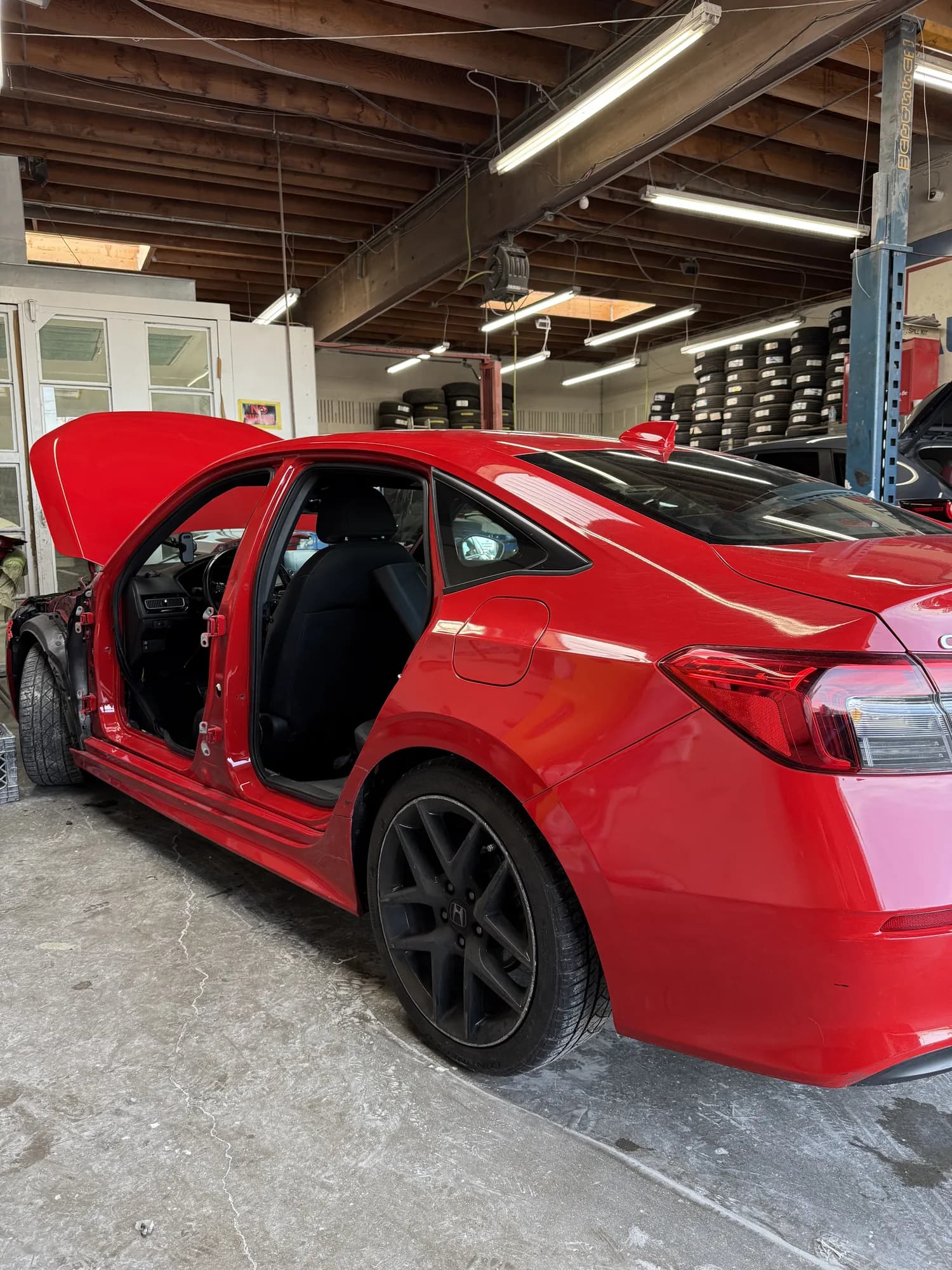
Most collision repairs take between two days and three weeks. A light cosmetic job runs two to four days, a moderate repair one to two weeks, and structural work three weeks or more. Nationally, the average collision-related rental sat at 15.1 days in the second quarter of 2026, which is a reasonable anchor for a typical repair.
The spread is wide because two things dominate the schedule and neither is how fast anyone works: how deep the damage goes, and how long the parts take to arrive.
How long collision repair actually takes, by damage level
Enterprise Mobility's Q2 2026 data puts the United States average collision-related rental at 15.1 days, splitting to 14.1 days for drivable vehicles and 20.7 days for non-drivable ones. [Source: Enterprise Mobility rental length data, Q2 2026] That six day gap between drivable and non-drivable is the single clearest predictor you have before anyone opens the car up.
| Damage level | Typical duration | What dominates the time |
|---|---|---|
| Light cosmetic, one panel or bumper | 2 to 4 days | Paint prep and cure |
| Moderate, several panels | 1 to 2 weeks | Parts, then refinishing |
| Heavy, no structural damage | 2 to 3 weeks | Parts availability |
| Structural | 3 weeks and up | Measurement, straightening, then the whole cosmetic repair on top |
What the days are actually spent on
Before the day-by-day, one piece of context on the direction of travel: the industry's estimate-to-vehicle-in interval peaked at almost 30 days in the fourth quarter of 2022 and has been trending down since. [Source: CCC Intelligent Solutions, Crash Course 2026, reported by Autobody News] Repairs are faster now than during the parts shortage, so an old quote from a friend is probably pessimistic.
Day one: teardown and the real estimate
The car comes apart around the damaged area. This is when hidden damage appears: a bent bracket, a cracked absorber, a rail that has moved. Any estimate written from photographs before this point is provisional by nature, not by negligence.
Days one to three: supplement approval
If teardown found more damage, the shop documents it and files a supplement with your insurer. Approval takes anywhere from hours to several days depending on the adjuster's queue. This is the most common reason a repair sits still, and it is the stage where a shop that chases its own claims earns its keep.
Ordering to arrival: parts
Common parts for common cars often arrive next day from Bay Area suppliers. Everything else is where weeks come from: back-ordered panels, parts shipped from out of state, or a model with a national shortage on one component. Nobody compresses a manufacturer back-order.
Structure, then body, then paint
Structure comes first because everything else aligns to it. Then panels are repaired or replaced and gaps are set. Then paint: prep, seal, color, clear and cure. Paint cannot be hurried without shortening how long the finish lasts.
Final day: reassembly, calibration and quality check
Trim, lights and sensors go back, panel gaps are checked, and anything requiring calibration is calibrated. Then the car is washed and inspected in daylight, because paint that matches under shop lighting should also match outside.
Why driver assistance technology adds days
Calibration is now a routine part of the schedule rather than an exception. CCC found that 28.3% of repairable estimates include at least one calibration operation. [Source: CCC Intelligent Solutions, Crash Course 2026, reported by Autobody News] Close to one repair in three.
It costs real time. CCC's Q3 2025 data shows repairs involving multiple calibrations averaging more than 17 days keys to keys, against 13 days for repairs needing none. [Source: CCC Intelligent Solutions cycle time data, reported by Autobody News] Four extra days, on average, for work that is invisible when you collect the car.
Those days are not optional. A forward radar or a front camera that is out of alignment still reports itself as functioning. The calibration is what confirms the system is aiming where the manufacturer intended, and skipping it is the cheapest corner available to a shop that wants to look fast. Ask whether your car needs one, and ask for it to appear as a separate line on the estimate.
The four things that actually cause delays
- Supplement approval. Usually the adjuster's queue rather than the shop's bay.
- Back-ordered parts. Worst on newer models and low-volume trims.
- Hidden damage. A repair scoped at four days genuinely becomes twelve if a structural rail has moved.
- Calibration requirements. Four days on average when multiple systems are involved.
Notice what is not on that list: how hard anyone is working. A shop that promises to beat these constraints is either not planning to do the operations, or telling you what you want to hear. Questions worth asking on day one are what the estimated completion date is and what would change it, whether all parts are in stock, who chases the adjuster, and whether the car needs calibration. A shop that answers those four clearly has thought about your week.
If the estimate turns out to be near your deductible, the timeline may be beside the point. Our guide to what bumper repair actually costs covers the small end, and your right to choose the shop covers what happens when an adjuster pushes back.
How we handle repair timelines in South San Francisco
We give you the realistic date at the start rather than the optimistic one, and we tell you the moment something changes it. We write the supplements and deal with the adjuster ourselves, because that is the delay we can actually control on your behalf.
If your car is drivable, we will often schedule the teardown so it is not sitting in our lot waiting for a part that has not shipped. We are at 136 South Linden Ave in the Lindenville district, two minutes from the 101 and the I-380 interchange, repairing Peninsula vehicles since 1987. Body and mechanical work happen under one roof, so a car needing mechanical work and collision repair is one visit rather than two. See also how we handle claims and structural repair.
Common questions about collision repair time
Why is my car sitting at the shop with nothing happening?
Almost always one of two things: the shop is waiting on supplement approval from your insurer, or waiting on a part. Both are genuinely outside the repair bay. A supplement is filed when teardown reveals damage the original photo-based estimate could not see, and it needs the adjuster to review and approve before the work can proceed. Ask your shop which of the two it is and what the expected date is. A shop that cannot answer that question specifically is not tracking your repair closely enough.
Does a non-drivable car take longer to repair?
Yes, and measurably so. Enterprise data for the second quarter of 2026 put drivable vehicles at 14.1 days and non-drivable at 20.7 days on average. The gap exists because non-drivable damage is usually deeper, more likely to involve structure, and more likely to need parts that are not held in local stock. It also means teardown cannot be scheduled around your availability, so the car occupies a bay from the day it arrives rather than from the day work starts.
Can I get my car back before the repair is finished?
Sometimes, if the vehicle is safe and roadworthy in its current state and the outstanding work is cosmetic and waiting on a part. This is worth asking about when a back-ordered panel is holding up an otherwise finished car. It is not possible where structural work is incomplete, where a safety system is uncalibrated, or where paint is still curing. The decision is about whether the car is safe to drive, so expect a shop to say no more often than yes.
Does the repair estimate include the time for calibration?
It should, and you should check. Calibration appears on 28.3% of repairable estimates and adds around four days on average when multiple systems are involved, so leaving it off the schedule makes a completion date meaningless. Ask for calibration to be listed as its own line item with its own time allowance. If a shop has not looked up whether your specific vehicle requires it, they have not read the manufacturer's repair procedure, which is a larger problem than the schedule.
If you want a realistic date for your own car rather than an industry average, bring it to our South San Francisco shop or send us photos. The estimate is free and the date comes with it.
Got a question about your own car? Call (650) 952-6036 or send us a few photos for a free estimate.
Bring us the car.
Call the shop and talk to someone who'll actually look at it, or send a few photos and we'll come back to you with an estimate.