
Can Your Insurance Company Make You Use Their Body Shop?
October 1, 2026 · 6 min read
No. California law puts the choice of repair shop with you. What your insurer may legally do, what it may not, and how to answer the four lines adjusters use.
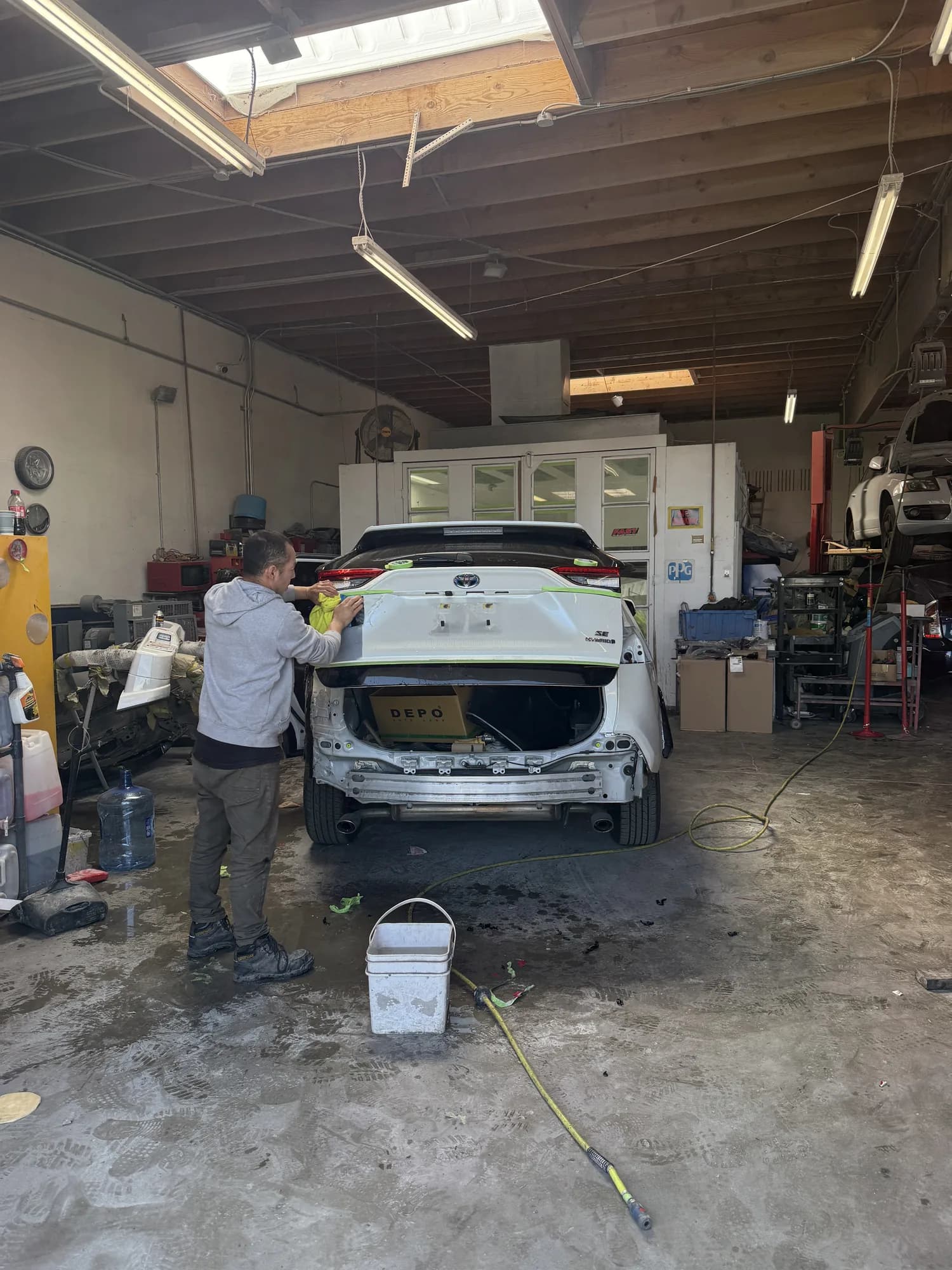
No. In California you choose the body shop that repairs your car, and your insurer cannot require you to use one of its own. This is written into state law, not into shop marketing: California Insurance Code section 758.5 prohibits an insurer from requiring that repairs be done by a specific automotive repair dealer.
The reason so many drivers believe otherwise is that an adjuster suggesting a network shop sounds exactly like an adjuster issuing an instruction. It is not one, and knowing the difference is worth real money.
What California law actually says about choosing a body shop
Section 758.5 of the Insurance Code sets the rule plainly. An insurer cannot require a claimant to use a particular repair shop, and cannot suggest that coverage depends on using one. [Source: California Insurance Code section 758.5, official text] The Department of Insurance tightened this further with anti-steering regulations that took effect on 1 January 2017 and which insurers had to comply with by that March. [Source: California Department of Insurance anti-steering regulations, 2017]
What the statute permits is also worth knowing, because it explains the conversation you are about to have. An insurer may give you truthful, non-deceptive information about the claims process, including repair warranties, the type of replacement parts to be used, the anticipated repair time and the quality of workmanship available. Recommending is legal. Requiring is not.
And if you use your own shop, the insurer still owes the reasonable cost of restoring the vehicle. Choosing independently does not shift the bill onto you.
The four things adjusters say, and what each one means
"Our shop is guaranteed. Yours is not."
What is guaranteed is the network shop's own workmanship, by that shop. Any competent body shop warrants its own work. Ask each one what the warranty covers and for how long, and compare the answers rather than the adjective.
"Going outside the network will slow everything down."
It does not have to, and the industry data says delay comes from elsewhere. Enterprise Mobility's Q2 2026 figures put the average collision-related rental in the United States at 15.1 days, splitting to 14.1 days for drivable vehicles and 20.7 days for non-drivable ones. [Source: Enterprise Mobility rental length data, Q2 2026] What separates those numbers is damage severity and parts availability, not network membership.
"We only pay up to our estimate."
Initial estimates are written from photographs and are routinely light, because damage behind a panel does not photograph. When the shop opens the car up and finds more, it files a supplement with documentation. This is a normal, expected stage of nearly every collision claim rather than a dispute.
"We are using aftermarket parts."
Sometimes permitted under your policy and sometimes not, and quality genuinely varies by part and manufacturer. The statute already contemplates your insurer telling you which type of replacement parts will be used, so ask for parts to be identified on the estimate as OEM, aftermarket or recycled, and decide from there.
Why the shop you pick matters more on a modern car
Twenty years ago the argument for choosing your own shop was mostly about paint quality and panel gaps. It is now also about electronics. CCC Intelligent Solutions found that 28.3% of repairable estimates include at least one calibration operation, reflecting how much driver assistance technology now sits behind bumpers and windshields. [Source: CCC Intelligent Solutions, Crash Course 2026, reported by Autobody News]
A calibration that gets skipped does not announce itself. The car drives normally and the dashboard stays dark. You discover the forward radar is pointing slightly wrong the first time the automatic emergency braking is supposed to intervene and does not. That is a safety system you are paying to insure, and whether it works after the repair is decided by the shop, not the adjuster.
The same applies to structure. Whether your car is measured against the manufacturer's dimensional specification or judged by eye is a shop decision, and it is the one that determines how the vehicle behaves in a second collision. More on how we approach frame and structural repair and collision repair.
How to handle the call without an argument
- Get the claim number and the adjuster's name. Everything else runs off those two pieces of information.
- State where the car is going. "I have chosen my shop, please send the estimate there" is a complete sentence. You do not need to justify it.
- Do not sign a blank authorization. Authorize a specific repair against a specific written estimate.
- Photograph everything before anything moves. Wide shots and close-ups, at the scene when you can.
- Let the shop and the adjuster talk to each other. That conversation is technical and it is not your job.
If you want the numbers in front of you before you decide whether to claim at all, our guide to what bumper repair actually costs covers the small end, where paying directly often beats filing.
How we handle insurance claims in South San Francisco
We work with all major insurers, write the estimate, submit it to your adjuster and handle supplements ourselves when hidden damage turns up. You are not the one chasing the claim, and you are not the one explaining a repair procedure to someone who has not seen the car.
We have been doing this at 136 South Linden Ave since 1987, two minutes from the 101 and the I-380 interchange, and we are family owned rather than a franchise with a call center between you and the person holding the welder. You can explain what happened in English, Spanish or Arabic. Estimates are free and written either way, and if the honest answer is that the repair costs less than your deductible, that is what the estimate will say. See our full insurance claims process.
Common questions about choosing your own body shop
Can my insurance company refuse to pay if I use my own shop?
No. California Insurance Code section 758.5 prevents an insurer from requiring a specific repair shop or implying that your coverage depends on using one. If you choose an independent shop, your insurer still owes the reasonable cost of restoring the vehicle to its pre-loss condition, subject to your policy terms and deductible. What can still be negotiated is the amount, because the insurer is obliged to pay a reasonable repair cost rather than any figure a shop puts forward. That negotiation happens between the shop and the adjuster.
What is steering, and is it illegal in California?
Steering is the practice of pushing a claimant toward a particular repair facility, whether by instruction, pressure or misleading implication. California regulates it directly: the Department of Insurance introduced anti-steering regulations effective 1 January 2017, on top of the existing statutory prohibition. Insurers remain free to recommend a shop and to give you truthful information about warranties, parts and expected repair time. The line is crossed when a recommendation is presented as a requirement, or when declining it is made to sound costly.
Should I get more than one estimate before choosing?
Two is useful, mostly to see whether the operations match rather than whether the totals do. Compare the line items: one estimate may include blending paint into the adjacent panels while another stops at the panel edge, and one may plan to repair a panel the other replaces. If a quote comes in dramatically lower, the useful question is what it leaves out rather than assuming you found a bargain. Beyond two estimates you get diminishing returns and a delayed repair.
Does using my own shop affect my claim record or premium?
Which shop you use has no bearing on either. What affects your premium is the claim itself: full coverage rates rise an average of 49% a year after an at-fault accident, roughly $1,160 more than a driver with a clean record pays, and the increase lasts at least three years. That is an argument for thinking carefully about whether to file a small claim at all, not an argument for using any particular repair shop.
If an adjuster is telling you the choice is not yours, it is. Bring the claim to our South San Francisco body shop, send us photos for a free written estimate, or look at finished work first. We will also tell you plainly when a claim is not worth filing.
Got a question about your own car? Call (650) 952-6036 or send us a few photos for a free estimate.
Bring us the car.
Call the shop and talk to someone who'll actually look at it, or send a few photos and we'll come back to you with an estimate.